
Are Lagos Developers to Blame? Why Do All Our Homes Look the Same?

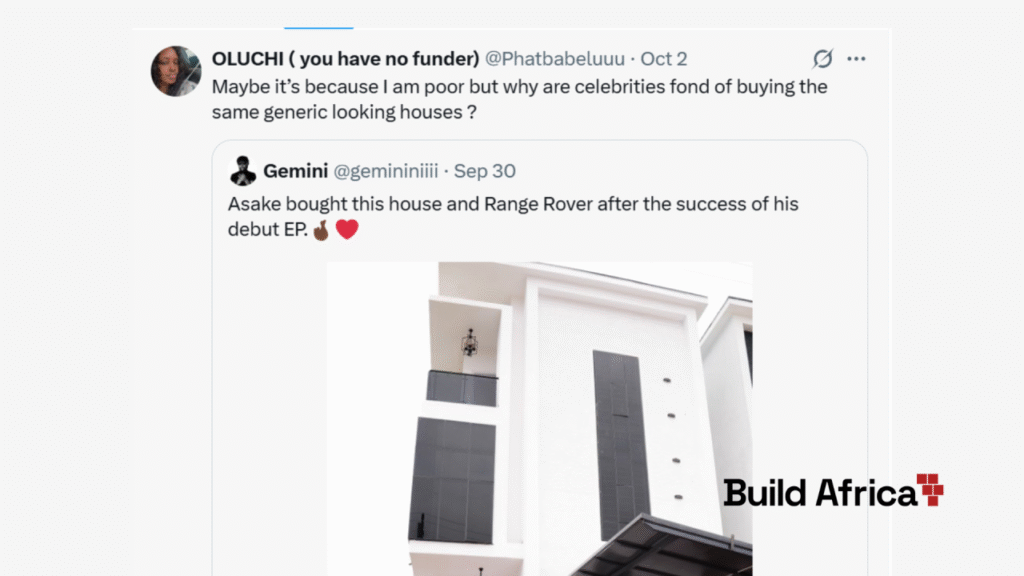
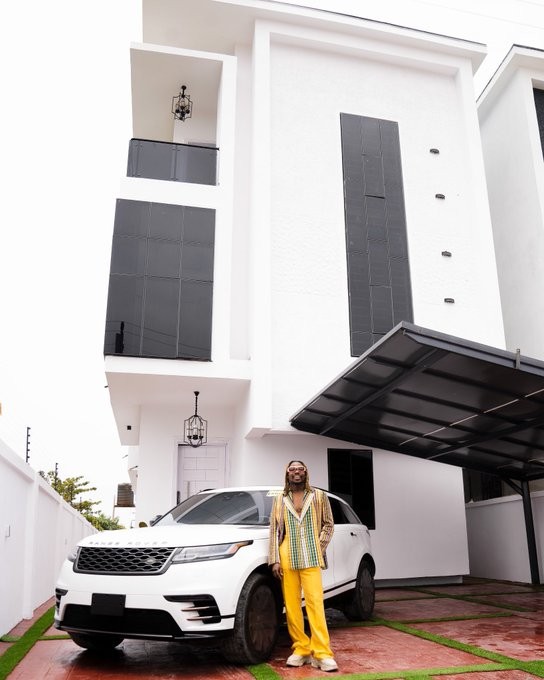
A few weeks ago on X (formerly Twitter), a photo of the Nigerian artist Asake’s Lagos property from a few years ago resurfaced online. The house, sleek, modern, white with black accents, looked like many others in the Lagos’ upscale neighborhoods.
The comments were blunt:
“Maybe it’s because I’m poor, but why are celebrities fond of buying the same generic-looking houses?” “Arrest the developer.”
It’s a familiar frustration. Drive through Lekki, Ajah, or even parts of Ikeja, and you’ll see it, rows of nearly identical duplexes and terraces. Same shape. Same layout. Same muted palette.
But here’s the thing: developers aren’t the only ones responsible.
At Build Africa, we supply building materials to developers, builders, and communities across Nigeria, and have come to see this issue as a symptom of deeper structural forces, not just a design choice.
1. The Economics of Efficiency
Let’s face it, in Lagos, land is expensive, demand is high, and margins are tight. Developers are under pressure to:
- Maximize space on small plots
- Minimize construction time
- Use readily available materials
Boxy, modular designs are the most cost-effective and scalable option. They allow for predictable budgeting and faster delivery, especially when financing is limited or interest rates are high.
A study on Millennium Housing Estates in Lagos found that modular designs reduce costs and speed up delivery, but alternative materials like stabilized laterite and interlocking blocks, though more climate-friendly, remain underutilized due to financing gaps and lack of awareness.
2. Planning Constraints & Regulatory Gaps
Urban planning in Lagos is often reactive, not visionary. Developers face:
- Inconsistent enforcement of building codes
- Limited incentives for architectural innovation
- Bureaucratic delays that discourage experimentation
Without strong design guidelines or zoning incentives, developers default to what works and what sells.
Formal planning mechanisms in Lagos disproportionately favor high-end developments, while overlapping jurisdictions and weak enforcement discourage innovation and long-term design thinking.
3. Buyer Preferences & Market Demand
Here’s a truth we don’t talk about enough: developers build what buyers want.
Many homeowners, including celebrities, want:
- “Modern” aesthetics (clean lines, symmetry)
- Familiar layouts
- Homes that look like what they see on Instagram or in gated estates
Few are willing to wait months for a custom build or pay extra for architectural uniqueness. The result? A sea of sameness.
Over 60% of Nigerian homebuyers now begin their search online, prioritizing aesthetics seen on social media. Gated estates and smart features are increasingly in demand, especially among diaspora buyers.
4. Climate & Cultural Disconnect
Ironically, these designs often ignore Nigeria’s tropical climate. They are often poorly ventilated, with poor heat retention, and lack of shaded outdoor spaces.
Traditional Nigerian architecture, with courtyards, verandas, and natural airflow, is rarely revived. Why? Because it’s seen as “old-fashioned,” not “aspirational.”
We’ve traded climate wisdom for visual conformity.
5. The Real Opportunity: Rethinking the System
If we want more diverse, climate-responsive, and culturally relevant housing in Lagos, we need to do these:
- Incentivize innovation through planning policies and tax breaks
- Educate buyers on the value of sustainable design
- Support developers with access to better financing, and design resources
- Celebrate architects who challenge the status quo
New financing models like the Ministry of Finance Incorporated Real Estate Investment Fund (MREIF) and digital credit scoring for informal workers are emerging to support innovation. Tax incentives for using renewable energy and local materials are also being proposed to encourage sustainable design.
The sameness of Lagos homes isn’t laziness, it’s a reflection of the system. Developers are doing what they can within the constraints they face.
So instead of blaming them, let’s ask:
“What kind of system would make it easier, and more rewarding, to build differently?”
Join the Conversation
Are you a builder, architect, or homeowner with ideas for breaking the mold? Have you seen a home in Lagos that truly stands out? Let’s talk about it, and share with someone who’s building differently.